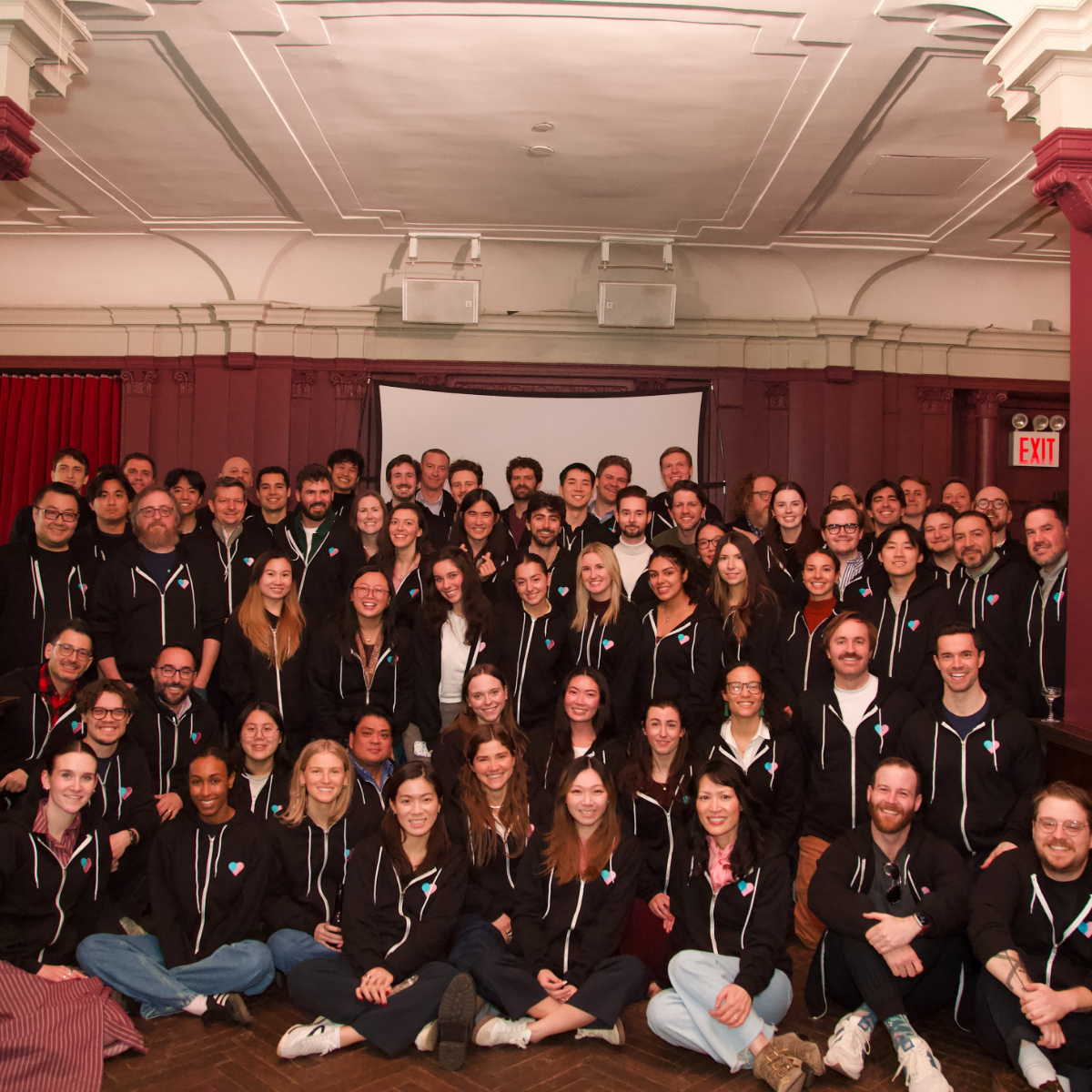
Courier Health Raises $50M Series B from Oak HC/FT
Every year, nearly 7 billion prescriptions are dispensed in the United States. Of the patients prescribed specialty medicines (the complex, high-cost therapies for chronic and rare diseases), nearly 30% never start therapy and 60-70% abandon it within the first year. For patients who receive a prescription for a medicine that could change their life, the system fails them before the drug ever gets a chance to work. That failure is operational. The drug works, but the patient just never gets to take it.
The infrastructure gap
The biopharma industry has built highly sophisticated commercial organizations to support patients on specialty medicines. Field access teams work to educate providers on prior authorization requirements and remove access barriers. Patient services teams navigate the complexity of copay assistance, specialty pharmacy coordination, and providing ongoing education and support.
But this work is performed across a patchwork of disconnected systems: spreadsheets, legacy CRMs built for sales reps (not patients), hub services portals, and email threads. The patient journey, which is inherently a single continuous experience, gets fractured across a dozen tools that don't talk to each other.
We've spent a lot of time at Work-Bench studying what happens when an industry's operational complexity outgrows its existing software infrastructure. The pattern is remarkably consistent: coordination costs add up, visibility collapses, and the people doing the hardest work (in this case, the patient- and provider-facing teams trying to get someone started on a life-altering therapy) spend more time jumping between systems than actually helping patients.
Why now
Two structural forces make this problem especially acute right now.
The first is the explosion of specialty medicines. The biopharma pipeline is overwhelmingly specialty: 75% of the roughly 7,000 drugs in development are classified as specialty medications. Each new therapy approval creates another commercial team that needs to manage patient access, adherence, and support, and those teams have been underserved by the current software stack.
The second is the migration of patient services in-house. For years, biopharma companies outsourced patient support to third-party hub services providers. That's changing and the reasons are clear: manufacturers want direct relationships with their patients, tighter operational control, and more ownership over outcomes. But bringing patient services in-house without a dedicated technology platform just internalizes the coordination problem.
A single patient's path from prescription to adherence touches the prescribing physician, the field access rep, the patient services team, the specialty pharmacy, the insurance company, and often a third-party hub. No one person or team has full visibility. And without visibility, it's impossible to intervene when things start to go wrong: when a prior authorization stalls, when a patient misses their first shipment, when someone quietly drops off therapy because nobody noticed they were struggling.
The CRM that didn't exist
Danny Sigurdson spent five years leading sales at ActionIQ, one of the first customer data platforms, where he watched enterprise after enterprise struggle to unify fragmented customer data into a single view that commercial teams could actually act on.
What Danny realized was that biopharma had the same data fragmentation problem as every other enterprise, but with dramatically higher stakes. When a retail brand loses track of a customer, they lose a sale. When a biopharma company loses track of a patient, that patient might lose access to a therapy they need to survive.
Danny founded Courier Health to fix this. Existing CRMs were designed to close deals, not coordinate care. Even the ones repurposed for healthcare treated the patient as a record in a sales workflow, leaving manufacturers with fragmented data and no real-time view of the journey. Courier Health is building the first solution architected entirely around the patient: unifying every data source, stakeholder, and touchpoint into a single system of record for the treatment experience.
What Courier Health built
The platform ingests the data streams that matter for a patient journey (specialty pharmacy feeds, hub data, claims, EHR signals, field activity) and stitches them into a single patient record. From there, it surfaces intelligence on which patients are at risk and where the journey is breaking down, and orchestrates action across internal and external teams in a compliant way.
The reason no one had done this well before is that patient data in biopharma is uniquely messy. It crosses organizational boundaries, carries strict regulatory requirements, and updates on different cadences from different sources. Building for this shape of data requires tradeoffs a generic CRM can't make.
What changes when you can finally see the patient
The impact shows up across Courier Health's customer base. The company quadrupled the number of therapies on its platform in 2025, and companies that deploy the platform are achieving an over 15% increase in patient starts, 10-12% increase in 6-month persistency rates, and 5-7x increase in team productivity.
At Denali Therapeutics, Courier Health replaced the need for teams to map out rigid process flows before they could operationalize patient services. With the right system in place, the focus shifted from process design to outcomes: how quickly patients are getting what they need, how information reaches them, and how they can connect with support on their own terms.
“As a CRM, Courier has prioritized that user experience, which is transforming how we think about creating new business processes." - Andres Diaz, Head of Product Management & Portfolio (Technology), Denali Therapeutics
This is exactly the pattern we see in the best enterprise software deployments. The tool doesn't just digitize an existing workflow. It reveals problems that were previously invisible and creates the operational space to actually solve them.
“Courier Health is the next generation of life science patient navigation technology. Patients deserve access to this treatment, and administrative work cannot be a hurdle to that. We’re proud to be able to make these investments and to build a platform designed to function at scale.” - Spencer Bailey, Vice President, Market Access, SetPoint Medical
These outcomes mean more patients getting on therapy faster and staying on it longer. In specialty pharma, where a single patient on therapy can represent significant annual revenue, the commercial case writes itself. But the human case is what matters: every patient who starts therapy faster is a patient whose disease isn't progressing unchecked while paperwork sits in a queue.
New funding to build the future of patient experience
We’re excited to have Oak HC/FT join us in this journey of building the leading patient experience company for life sciences by leading their $50M Series B. We’re also excited to triple down in this round after having led their seed round back in 2021.
We've long believed at Work-Bench that the best enterprise software companies don't just digitize existing workflows, they reveal a better operating model that was always theoretically possible but practically unreachable without the right infrastructure. Courier Health is doing exactly that for biopharma commercial organizations. The patient journey was always supposed to be a coordinated, patient-centric experience. It just never had the software to make that real.
Danny and the Courier Health team are building something that matters, not just commercially, but for the hundreds of millions of people living with chronic and rare diseases who deserve better than a system that loses track of them between prescription and pharmacy. We couldn't be more proud to continue backing them on this mission!
Read more on Courier Health blog and in Fierce Healthcare.